Detect Early, Protect Better
Blood pressure measurement for dogs and cats
Blood Pressure Measurement for Dogs and Cats
Blood pressure measurement is an important part of modern veterinary medicine. Persistently high or low blood pressure can significantly affect your pet’s health and damage vital organs such as the heart, kidneys, eyes and brain.
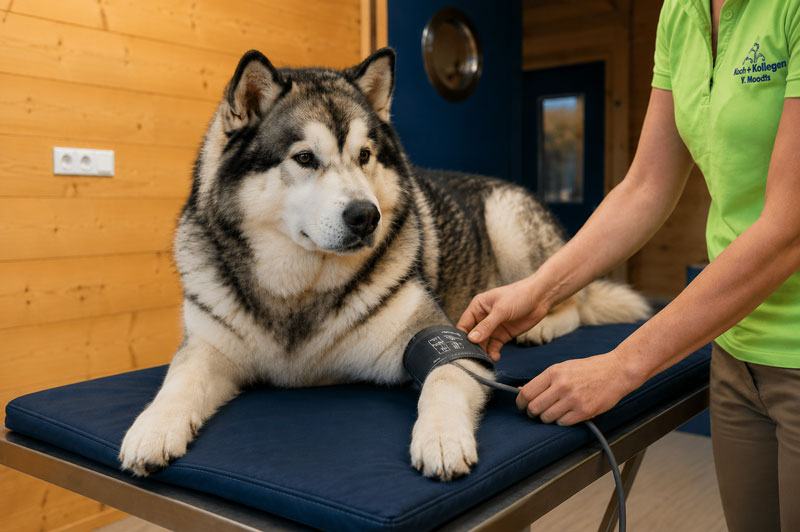
In our practice, blood pressure is measured gently and with minimal stress using specialised cuffs placed on a limb or the tail. The procedure is painless and usually takes only a few minutes.
Especially in older cats and dogs, high blood pressure often goes unnoticed for a long time because animals initially show no obvious symptoms. Regular monitoring allows for early diagnosis and treatment before secondary health problems develop.
Blood pressure measurement provides valuable information about your pet’s health and helps us plan and monitor necessary treatments. This enables targeted therapy and contributes significantly to your pet’s long-term health and quality of life.
Possible Consequences of High Blood Pressure
A persistently elevated blood pressure can damage various organs.
Commonly affected are:
- Eyes: In severe cases, high blood pressure can lead to sudden blindness
- Kidneys: Existing kidney disease may worsen further
If detected early, many of these consequences can be prevented or significantly reduced.
How Blood Pressure Measurement Works
The blood pressure measurement is painless for your pet and takes only a few minutes.
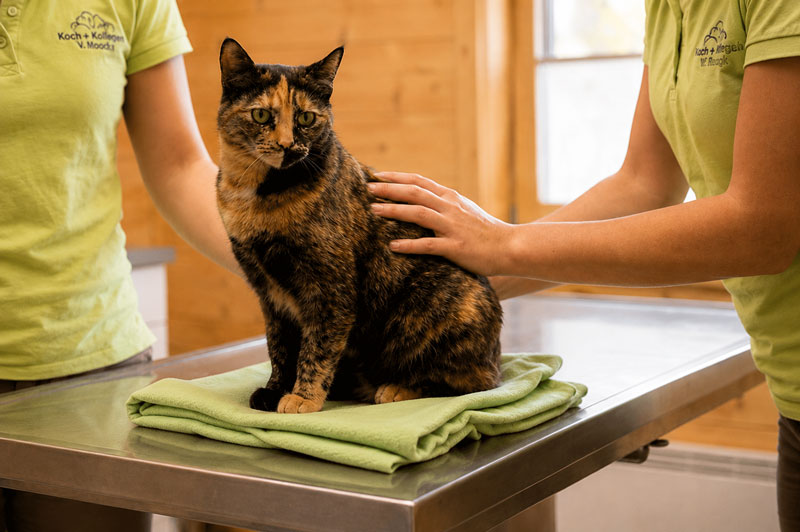
It is performed in a calm environment, usually on a leg or the tail. Because stress can temporarily affect blood pressure, measurements are taken in a relaxed atmosphere and repeated if necessary.
This provides reliable readings that serve as the basis for further diagnosis and treatment.